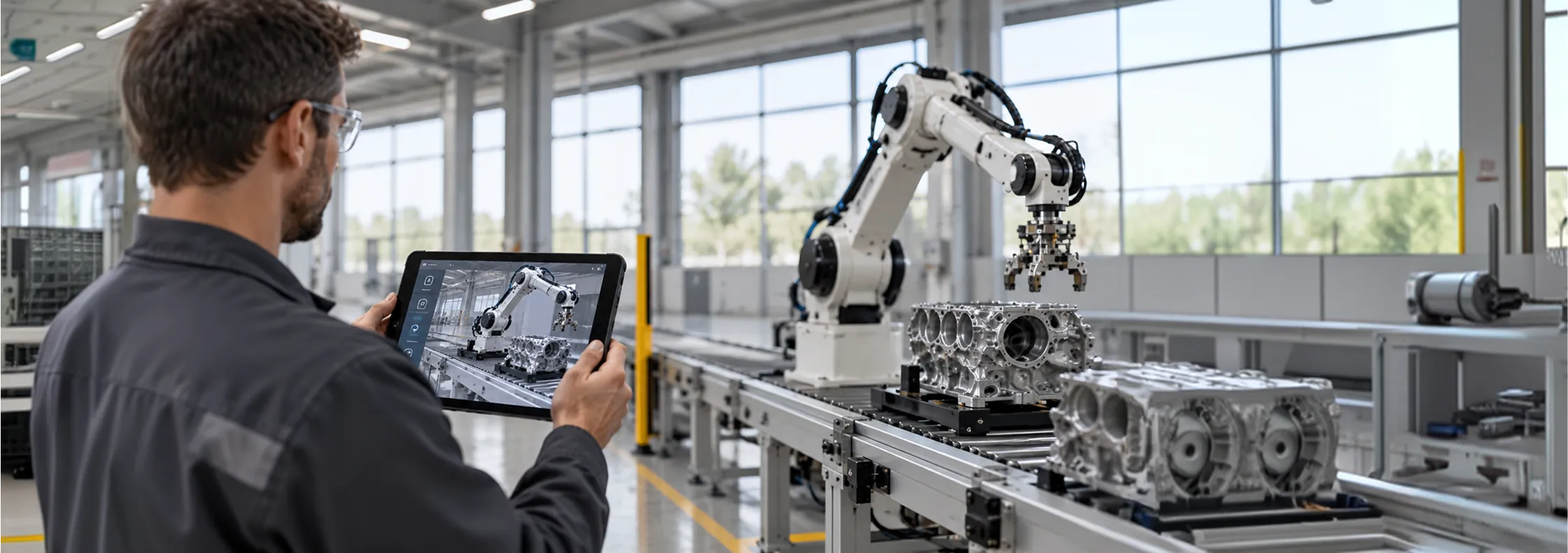
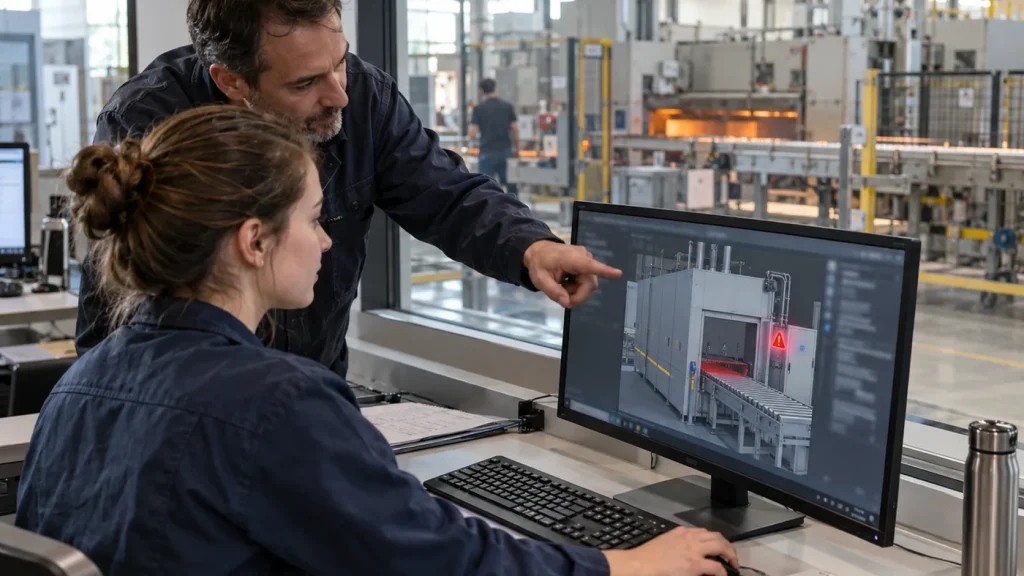
A Digital Twin is a 3D replica of machines, plants, departments, or laboratories, linked to real-world data. It allows you to see what is happening right now, to simulate a change before implementing it, and to train people without altering the original.
It's the living version of what you have: it updates with your data, shows you where to take action, and lets you try out a change before you actually make it.
01
Your data, viewed from space
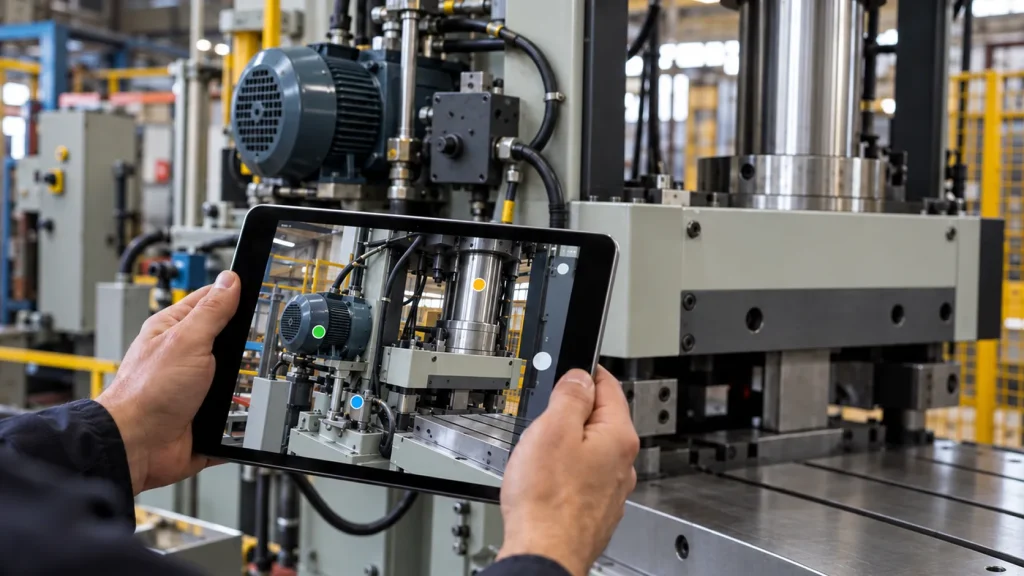
Temperature, speed, alarms, and production are no longer just rows in a table: they appear on the right machine, in the right place. A quick glance is all it takes to understand what’s happening.
02
Run a simulation before making your decision
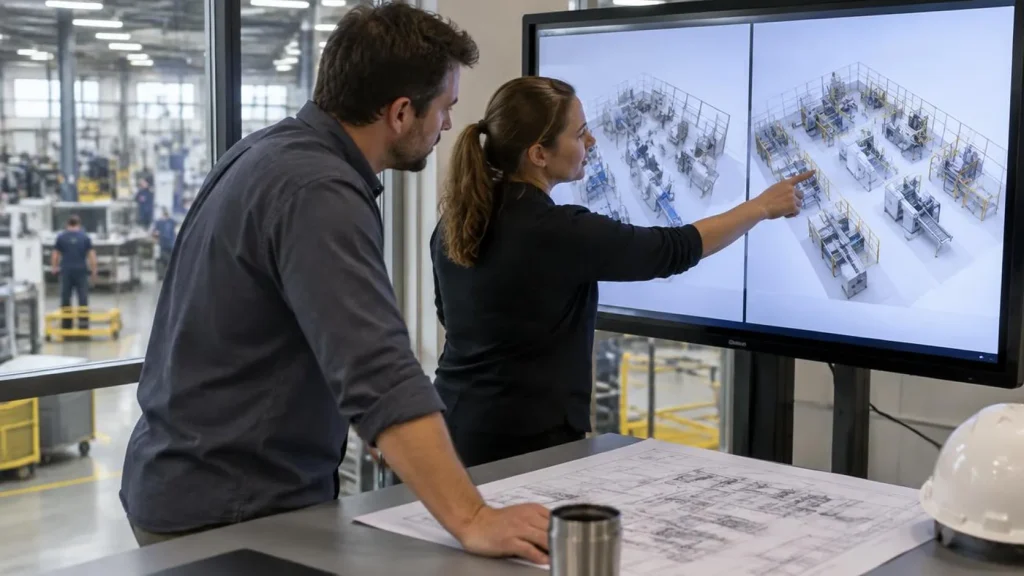
Change a parameter, add a machine, or reschedule a shift: the digital twin shows you the impact on production, downtime, and energy consumption before you spend a single pound or stop a production line.
03
The control room, where you are
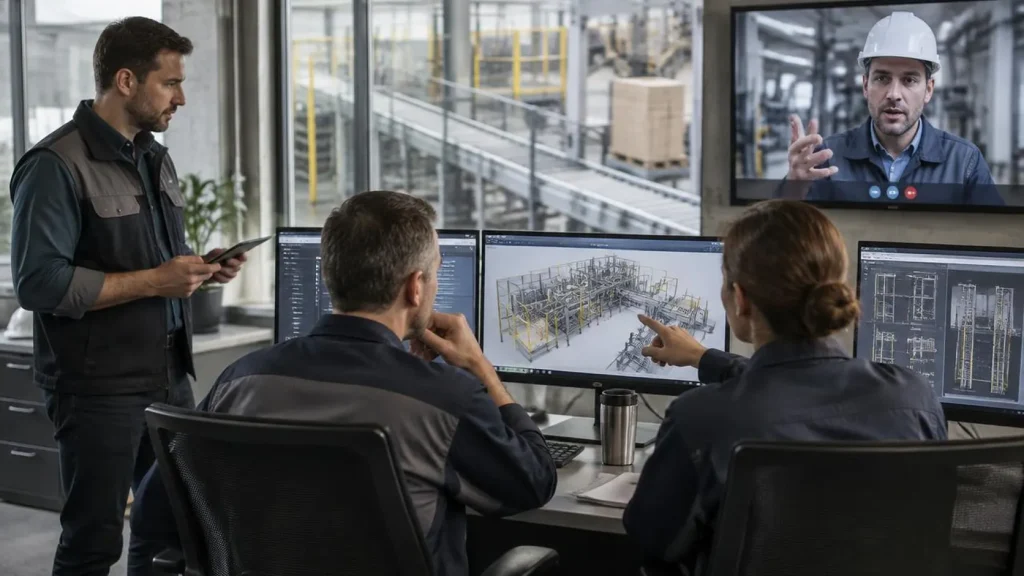
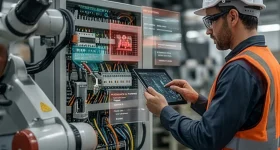
Maintenance, production, and suppliers all access the same environment – whether via a headset, a tablet, or a browser. They see the same things, leave notes on the components, and make decisions together.
04
The twin that trains people
The twin itself becomes a training environment: you simulate faults and replication procedures while the real plant continues to operate.
One product, three worlds.
01
Industries
Onboarding new operators, maintenance, safety, and critical procedures – all without stopping the production lines or putting equipment at risk.
Virtual laboratories for schools, technical institutes, and universities: experiments and equipment accessible to every student, safely and with no material costs.