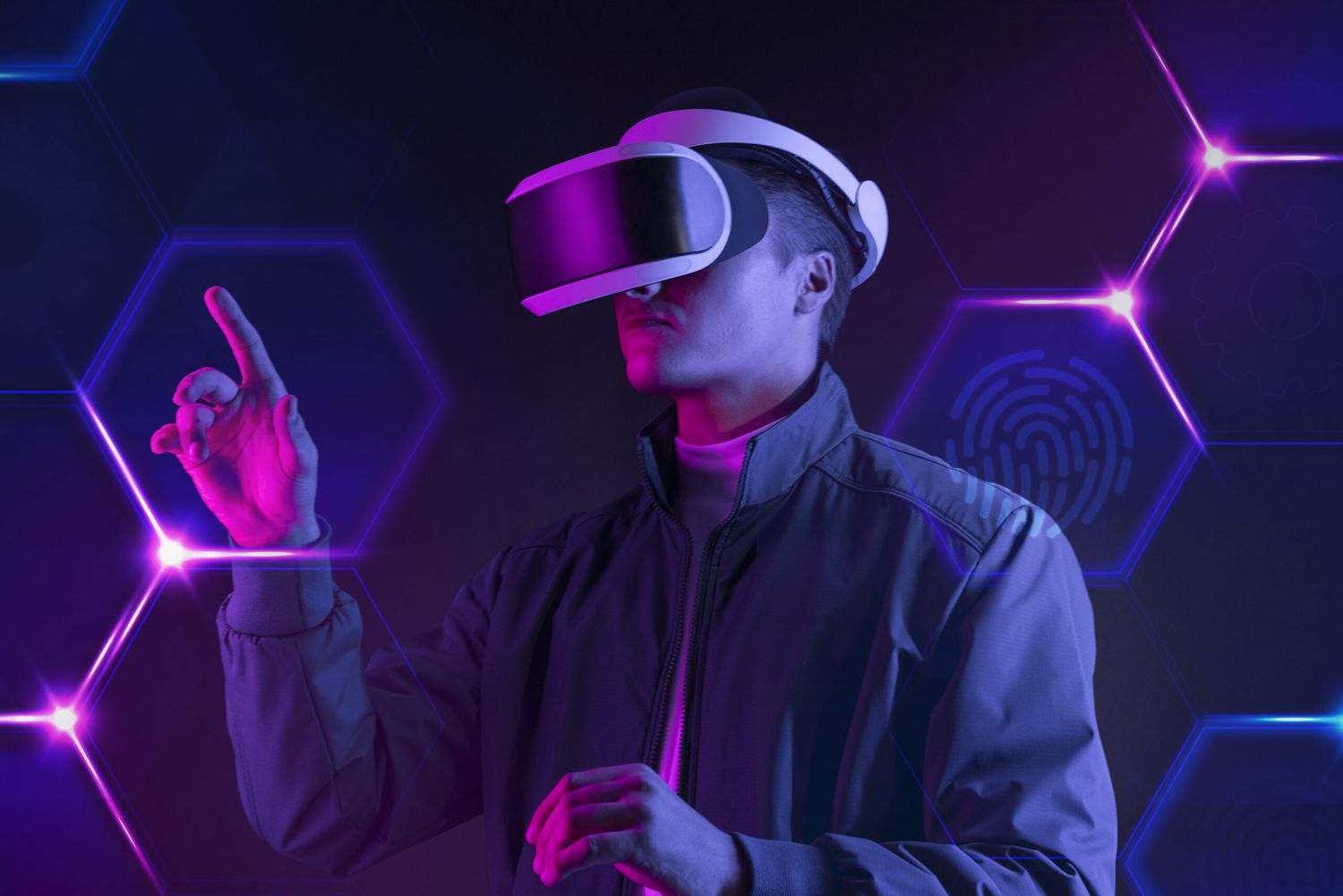
2021 marked the moment the “metaverse” stopped belonging to science fiction and became a multi-billion-dollar bet. Yet within little more than two years, that same word had lost all relevance — in newspaper headlines and boardroom agendas alike.
Many observers read this shift as proof that the metaverse had simply been a passing technology fad. In reality, the metaverse has not disappeared; it has transformed.
From narrative to applications
The cycle we have witnessed reflects a recurring pattern in the history of innovation, known as the “Hype Cycle” in Gartner’s classification: a phase of inflated expectations is inevitably followed by a phase of disillusionment. For technologies with a genuine application base, however, that phase is not an end point but the foundation for something more solid: productive adoption in the contexts where they create tangible value.
And that is exactly what is happening with immersive technologies. The market has gradually abandoned the term “metaverse” to focus on a broader and more precise technology ecosystem: extended reality (XR), which encompasses virtual reality (VR), augmented reality (AR) and mixed reality (MR). Today, artificial intelligence (AI) must also be added to this ecosystem — not as a parallel technology, but as an enabling component that amplifies the potential of XR: it is AI that makes immersive environments adaptive, contextual and geared towards generating measurable value. The point is not to do artificial intelligence for its own sake, but to use it where it genuinely changes the quality of the experience and the output.
Where and how the market is growing
According to IDC, European XR spending will reach $8.4 billion by 2029, with a compound annual growth rate (CAGR) of 16% over the five-year period. However, the North American market remains the largest and most mature, with spending estimated at $35–40 billion by 2027 and a share of around 35-40% of the global XR market, compared with 20-25% for Western Europe. The gap is structural, not merely one of scale: in the United States, enterprise adoption is more advanced and widespread, with established investment in training, industrial simulation and remote assistance across sectors such as defence, healthcare and high-tech manufacturing. In Europe, and in Italy in particular, the trajectory is similar, but with a lag that represents both a gap to be closed and a concrete opportunity. In both regions, the most significant finding is the same: it is the growing integration of XR into business processes that is driving demand for hardware (headsets), not the other way round. In other words, the market is being shaped by those who use these technologies, not by those who make them.
The real change of the past two years has been in applications, not technology. Companies have stopped treating XR as a showcase novelty and have begun integrating it into specific operational processes, focused on generating tangible value and a measurable return on investment.
The most established applications fall into 5 main areas:
- Technical training and operational simulation: immersive simulations allow operators to be trained in safe environments before working on complex machinery or in high-risk settings
- Academic training and virtual laboratories: universities and technical institutes are introducing immersive environments that let students practise in realistic settings that are hard to replicate in the classroom, widening access to hands-on experimentation even where physical infrastructure is logistically complex or economically unsustainable
- Industrial design and prototyping: the ability to visualise and iterate on full-scale 3D prototypes before physical production is changing design processes in sectors such as automotive, aerospace and construction
- Remote assistance and maintenance: AR solutions for remote support are now being put to concrete use in operationally intensive sectors such as energy, utilities and manufacturing, where shorter intervention times and remote access to specialist expertise have a direct impact on efficiency and operational continuity
- Digital twins and predictive monitoring: digital replicas of physical assets (plants, machinery, infrastructure) make it possible to monitor the state of systems in real time, anticipate failures through predictive maintenance and simulate operating scenarios before any work in the field, reducing machine downtime and optimising asset life cycles
In Italy, the industrial landscape offers particularly favourable conditions for XR adoption. The country’s productive fabric is characterised by a strong presence of highly specialised manufacturing SMEs — sectors in which the transfer of technical know-how, operator training and the quality of production processes are critical competitive factors.
On the incentives front, the Italian regulatory framework offers significant instruments for two distinct types of stakeholder. On the one hand, there is the iperammortamento (hyper-depreciation): the tax incentive designed to support companies investing in high-tech Industry 4.0 assets. On the other, there is the Patent Box, aimed at companies developing proprietary XR technology, which allows them to benefit from preferential taxation on income derived from those intangible assets, encouraging innovation and the exploitation of technology IP. Two different instruments for two different stakeholders, both signalling one thing: the regulatory ecosystem is gearing up to support the transition towards immersive manufacturing.
Convergence with artificial intelligence
Another factor accelerating this evolution is the integration of artificial intelligence with immersive technologies. Multimodal AI models are making it possible to generate 3D content automatically, create adaptive virtual environments and develop intelligent assistants capable of operating within XR spaces. These are not future scenarios: this convergence is already changing workflows in industrial production and architectural design, shortening development times and lowering the technical barriers to adoption.
AI-XR convergence paves the way for what some analysts call “spatial computing”: a paradigm in which access to information and digital tools no longer takes place through two-dimensional screens, but through three-dimensional environments in which data, processes and people can interact more intuitively and contextually.
XR is no longer a futuristic promise, nor a niche entertainment tool: it is an operational platform that the most forward-thinking companies are already using to improve productivity, reduce risk and tackle some of manufacturing’s structural challenges. The significant change is not technological but cultural: companies have stopped asking “what could we do with these technologies” and have started asking “where in our process do these technologies generate a measurable advantage”.
More articles
October 2026 · Virtual Reality
Why extended learning projects stall after the demo
September 2026 · Artificial Intelligence
Humanoid robots: the real capital is the know-how of senior technicians

July 2026 · Education